Bo-taoshi Rules: Japan's Pole-Toppling Game, Positions & Safety
- Region:
- Japan
- Tags:
- Team, Strength, Territory, From Japan, Youth, Traditional
At a glance
- Players
- 10–300 players
- Game length
- Matches are short (2 minutes at the National Defense Academy). If neither pole falls, the match is replayed
- Equipment
- One thick wooden pole per team and shirts in team colors. Often played barefoot for safety
- Space
- Two circles for the poles and room to run between them, sized to the number of players
Contents (8)
What is this game?
Bo-taoshi (Japanese for "pole toppling") is a Japanese team game in which each side stands up its own pole and defends it while trying to topple the other team's pole first. Each team splits into defenders, who hold and guard their pole, and attackers, who charge the opponent's. It is a classic event at Japanese school sports days.
The most famous version is played at the National Defense Academy of Japan in Yokosuka. Every November, at the academy's anniversary festival, cadet battalions face off with 150 players a side, and videos of these huge, chaotic matches have made bo-taoshi known around the world.
So is bo-taoshi dangerous? It can be. Bodies pile up and players can be trampled or fall from the pole, so it needs clear safety rules and adult supervision. Alongside the rules and positions, this article covers how schools and groups can run it more safely.
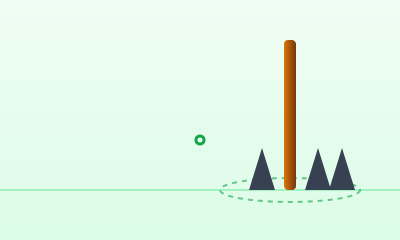
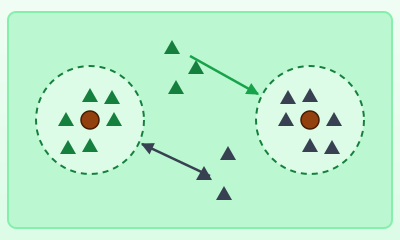
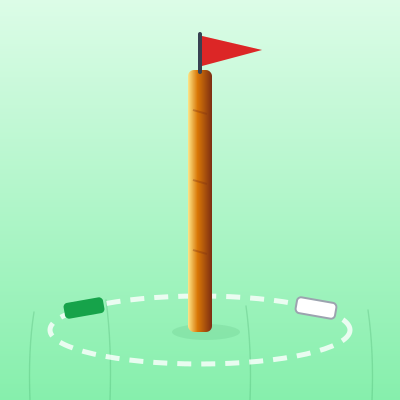
Figure: The basic layout. Defenders guard their own pole inside its circle, while attackers rush the opponent's pole. (At the National Defense Academy, defenders may only move inside the circle.)
Equipment & setup
- Poles: one per team, a log or wooden post taller than a person and strong enough for people to cling to (roughly 3 to 5 m is typical). Some versions put a flag on top
- Field: two circles for the poles with flat, open ground between them. Choose soft ground with no stones or steps
- Clothing: shirts that show each team's color. At the academy, attackers wear their battalion's color (red, blue, green, or orange) and defenders wear white
- Safety prep: players are often told to cut their nails short and play barefoot, and some wear rugby headguards. Some schools ban headbands so nobody can be choked by one
- Officials: one judge per pole to call when it has fallen, each with a whistle to stop play
Players & ages
| Format | Players | Notes |
|---|---|---|
| National Defense Academy festival | 150 per team (75 attackers, 75 defenders) | Battalion against battalion; 2-minute matches |
| Junior and senior high school sports days | By grade, class, or house | Rules vary from school to school |
| Primary school and community games | Start small, around 10 to 20 per team | Use low-contact versions such as "grab the flag to win" |
Differences in size and strength cause injuries, so group players by age and build.
Rules
How a match works (minimal rules)
- Split into two teams and stand each pole up in the center of its circle
- Each team divides into defenders (hold and surround the pole) and attackers (go after the other pole)
- On the signal, attackers charge the opponent's pole while defenders hold their own
- The first team to topple the other pole (to an agreed angle) wins
- Punching, kicking, and other rough play are fouls. When the judge blows the whistle, everyone stops immediately
Standard rules (adding skill)
With big teams, players take on specific roles. The positions used at the National Defense Academy:
| Side | Role | Job |
|---|---|---|
| Attack | Scrum | Locks together to smash into the defensive ring and act as a springboard for teammates |
| Attack | Charger (tokkō) | Leaps onto the pole to drag it down |
| Attack | Rover (yūgeki) | Supports the attack wherever needed |
| Defense | Pole holders (bōmochi) | Keep the base of the pole steady |
| Defense | Rider (uenori) | Sits on top of the pole and fends off attackers who jump onto it |
| Defense | Circle | Rings the pole to keep attackers out |
| Defense | Killer | Intercepts and disrupts attackers |
Official competition rules
There is no national governing body and no single official rulebook for bo-taoshi; each school or organization sets its own. The best-known rules are those of the National Defense Academy:
- Teams: 150 players per side, split into attackers and defenders
- Time: two minutes. If neither pole falls in time, the match is undecided and replayed
- Winning: a team loses when its pole is tilted down to 30 degrees from the ground. A judge signals with a flag and declares the winner (until 1973 the pole only had to reach 45 degrees)
- Defensive zone: each pole stands in a circle marked on the field, and defenders may move only inside it
- Fouls: punching, kicking, strangling, pulling heads, and similar dangerous play are banned. Three fouls and a team is disqualified
- Safety checks: before each match, instructors take a head count and check that nails are cut. Cadets from striking clubs such as karate and boxing may not attack and must play defense

Figure: At the National Defense Academy, a team loses when its pole is pulled down to 30 degrees from the ground (orange arc). Schools often use a simpler test, such as grabbing a flag from the top of the pole.
Scoring examples
Bo-taoshi has no points; each match is simply won or lost. Some typical calls:
- Example 1: a green charger leaps onto the grey pole and drags it down to 30 degrees. The judge raises the flag: green wins
- Example 2: after two minutes neither pole has reached the angle. No result; replay the match
- Example 3: a grey player punches an opponent, the team's third foul. Grey is disqualified
Common fouls and tricky calls
- Punching and kicking: the most common dangerous acts, and banned under the academy's rules
- Strangling and pulling heads: banned because they cause serious injuries. Grabbing clothing or headbands can also choke a player
- Defenders leaving the circle: under the academy's rules, defenders must stay inside it
- Has the pole fallen?: angles look different from different spots, so put a judge at each pole and agree on flag and whistle signals beforehand
Tips for enjoying the game
Bo-taoshi safety
Players can be crushed under a pile-up, trampled, or fall from the pole. In September 1984, at a sports festival at a private junior and senior high school in Fukuoka, a boy was kicked in the stomach during bo-taoshi, fell, and was trampled by other students, suffering serious internal injuries. His family sued the school; in 1992 the Kokura branch of the Fukuoka District Court dismissed the claim. Bo-taoshi is often listed alongside the cavalry battle (kibasen) as one of the most dangerous sports-day events, and some schools have dropped it for safety reasons.
Adult supervision
- Put one judge at each pole and several more adults watching the whole field
- Give every judge a whistle, and practice beforehand so that everyone stops whoever blows it
When to stop play immediately
- someone is trapped under a pile of players
- someone falls head first, or is being grabbed by the neck or head
- anyone punches or kicks
- the pole is falling onto people, or looks ready to break
Safer rule changes
- Grab the flag: make taking a flag or cloth from the top of the pole the win, so the pole never has to come right down. This relatively safe version is used in primary schools
- No riders: don't let anyone climb the pole, to avoid falls from height
- Shorter, smaller: shorten matches and limit how many attackers can go in at once
- Even teams: group players of similar age and size
- Getting ready: cut nails, remove glasses and jewelry, wear headguards, and make sure no clothing or headband can tighten around the neck
Age variations
- Primary school: use a short, light pole and the flag version. You can even start with "touch the pole to win" and no body contact
- Junior and senior high school: assign roles and plan tactics, and increase the number of judges and supervising adults
- Adults and community events: strength differences are large, so make it voluntary and warm up first
Playing Bo-taoshi in Japan
- The National Defense Academy: bo-taoshi has been played at the academy's anniversary festival every year since about 1954, when the National Safety Academy was renamed the National Defense Academy. It is one of the academy's "three great contests", along with the spring cutter (rowing) race and the cross-country race at the end of the academic year, and it carries on a game played at the prewar army and naval academies. Check the academy's own announcements for festival dates and whether it is open to the public
- School sports festivals: some junior and senior high schools still keep bo-taoshi as a signature event. Rules vary by school, so go over the safety rules with everyone first
- Where to play: on grass or soft dirt where falls are cushioned. Don't stage mass-contact games like this in public parks
Frequently asked questions
Q. How many players are on a bo-taoshi team?
There is no fixed number. The National Defense Academy plays 150 a side, split into attackers and defenders. Schools usually play by class or house, with equal numbers on each side.
Q. How do you win at bo-taoshi?
You win by toppling the other team's pole first. At the National Defense Academy, a pole counts as down at 30 degrees from the ground, and a match with no result after two minutes is replayed. Schools sometimes use "grab the flag to win" instead.
Q. Is bo-taoshi dangerous?
Yes, it carries real risks. Players can be crushed in a pile-up, trampled, or fall from the pole, and some schools have stopped playing it. If you play, ban punching and kicking, have adults supervise, and agree in advance when play must stop.
Q. Is it the same as the sandpit game "bo-taoshi"?
No. Japanese children also use the name for a sandpit game, also called yamakuzushi, in which players take turns scooping sand from a mound without letting a stick on top fall over. This article is about the team sport where sides try to topple each other's poles.
Q. Is bo-taoshi an Olympic sport?
No. Bo-taoshi has no international federation or official rulebook, and it is not played at the Olympics or other international multi-sport games. It survives as a school and academy tradition in Japan.
Learn more
- Bo-taoshi (Wikipedia): rules and positions based on the National Defense Academy's explanation
- Bo-taoshi (Japanese Wikipedia): the academy's roles and a record of accidents
- National Defense Academy of Japan: academy events, including the anniversary festival
- Related: Tug of war, Kabaddi, and Flag football, other team contests of strength and territory
Share this page