Kibasen (Cavalry Battle) Rules: How to Play Japan's Chicken Fight Game & Stay Safe
- Region:
- Japan
- Tags:
- Team, Strength, From Japan, Kids, Youth, Traditional
At a glance
- Players
- 8–200 players
- Game length
- Rounds are kept short; the organizer sets the time limit and the number of rounds
- Equipment
- A cap or headband for each rider, in team colors
- Space
- Flat, soft ground where the horses can run around (grass or a dirt field). There is also a pool version
Contents (8)
What is this game?
Kibasen (Japanese for "cavalry battle") is a team game in which three players form a "horse" and carry a fourth, the rider, who tries to snatch the caps or headbands off the other team's riders. A horse whose rider loses the cap, or falls off, is out and leaves the field. Usually two teams, often red and white, face off, and kibasen is a classic event at Japanese school sports days.
Nobody knows exactly where it started, but with players standing in for horses and warriors, it is generally thought to imitate a samurai battle. Many people outside Japan first met the English name cavalry battle in My Hero Academia, where it is one of the events at the U.A. Sports Festival. The closest game in English-speaking countries is the chicken fight (also called shoulder wars): pairs with one player on the other's shoulders push and pull until one rider goes down, usually in a pool or a lake.
Riders grapple high above the ground, and a fall can mean landing on the head or neck. Alongside the rules and winning tips, this article covers supervision and rule changes that prevent injuries.

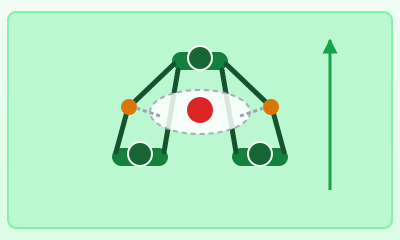
Figure: A horse seen from above. Two carriers stand diagonally behind the front carrier. The clasped hands (orange) are the rider's stirrups, and the arms resting on the front carrier's shoulders act as the saddle.
Equipment & setup
- Caps or headbands: worn by the riders, in colors that show each team, like the reversible red-and-white caps Japanese schoolchildren wear. Remove chin straps, or use ones that come off easily, so nobody is choked in a tussle
- Field: flat, soft ground with no stones or steps. Choose grass or a dirt field, never concrete or asphalt
- Getting ready: cut nails short and remove glasses, hairpins, and jewelry. Some schools play barefoot
- Referees and spotters: put a referee beside every pair of horses that engage, plus spotters ready to catch a falling rider, and agree on whistle signals in advance
How to build a horse: rider, front, and rear
A horse is normally a team of four: three carriers and one rider on top.
| Role | Also called | Job | Best suited to |
|---|---|---|---|
| Rider | Top player | Grabs opponents' caps from above and protects their own | Someone light with good balance |
| Front carrier | Lead, front horse | Sets direction and supports the rider from the front | Someone big and strong |
| Rear carriers (2) | Back horses | Hold the rider's feet from behind and follow the front carrier | Players close in height to the front carrier |
To build the horse:
- The front carrier faces the direction of travel, and the other two stand diagonally behind, forming a triangle. All three face forward
- Each rear carrier rests the inner hand on the front carrier's shoulder
- Each rear carrier clasps the front carrier's hand (reached back) with the outer hand
- The rider steps into the clasped hands (the stirrups) and sits astride the arms on the shoulders (the saddle)
- The rider steadies themselves with hands on the front carrier's shoulders, and on a signal everyone stands up
A horse whose three carriers are a similar height keeps the rider level. If numbers don't work out, two players can carry the rider piggyback or on their shoulders, but this is less stable, so avoid it with younger children.
Players & ages
| Format | Players | Notes |
|---|---|---|
| Primary school sports day | A few to a dozen or so horses per team (4 per horse) | Usually cap-grab, often with charging banned |
| Junior and senior high school sports festivals | By grade, class, or house | Rules vary by school. Play gets rough, so add more supervision |
| One-on-one bouts and small games | From 2 horses (8 players) | One horse against one inside a ring |
Size differences cause injuries, so match horses by build and age when dividing teams.
Rules
There is no national governing body and no single official rulebook for kibasen. What follows is the most common school sports-day format.
How a match works (minimal rules)
- Split into two teams and build horses of four. Riders wear caps or headbands in their team color
- Both teams line up at opposite ends of the field, and horses stand up on the signal
- When play starts, horses move freely and riders try to grab each other's caps
- A horse whose rider loses the cap, falls, or whose horse collapses is out: the players dismount on the spot and leave the field
- On the final signal everyone stops, and the winner is decided by the number of horses left or caps taken
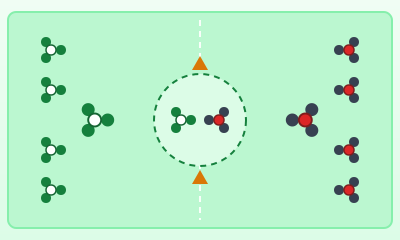
Figure: The two teams line up facing each other; the larger horses are the generals. The center circle is a ring for one-on-one bouts, watched closely by referees (orange).
Standard rules (adding skill)
Once players are comfortable, change how a match is won to bring in tactics.
| Format | How you win | Notes |
|---|---|---|
| Elimination | The first team to knock out every opposing horse wins | The simplest. Pair it with a time limit so it doesn't drag on |
| Timed | When time runs out, the team with more horses left wins | Keeps matches the same length |
| Caps taken | The team that takes more caps within the time wins | Scores points even when no horse falls |
| General's battle (Kawanakajima style) | The first team to bring down the other team's general wins | Teams split into guards for their general and raiders. In Kyushu the whole event is sometimes called "Kawanakajima", after a famous samurai battle |
| One-on-one | One horse from each team fights. Pushing the other out of a ring can also count as a win | Less dangerous than a free-for-all, and also used to settle a drawn elimination match |
Some schools use points, such as making the general's cap worth more or ranking horses by value.
Official competition rules
With no official rulebook, the school or organizer decides the following. Go over them with every player before you start.
- When a horse is out: when its cap or headband is taken, or when its rider falls? Cap-grab is safer and is common in primary schools
- Collapsing horses: under some rules a horse that breaks apart is out even if the rider never touches the ground
- Fouls: hitting or grabbing above the face, shoving a rider off, grabbing the neck or clothing, and carriers using their hands against opponents are typical fouls
- Time and rounds: how long each round lasts and how many are played (knockout, round robin, and so on)
- Referees: enough referees to stand right next to every pair of horses that engage
Scoring examples
Examples using the "caps taken" format:
- Example 1: in the time allowed, green takes 5 caps and grey takes 3. Green wins
- Example 2: a grey rider keeps the cap, but the horse collapses and the rider's feet touch the ground. That horse is out (decide beforehand whether caps it already took still count)
- Example 3: in a general's battle, a green horse grabs the grey general's cap. Green wins at once
Common fouls and tricky calls
- Hitting or pulling the face or head: the most dangerous act. Make reaching for anything other than the cap a foul
- Shoving riders off and charging: when a whole horse rams another at full speed, riders can fall head first. Ban charging in primary schools
- Running away: some rules penalize horses that avoid contact for the whole match
- A cap falls off by itself: agree in advance whether a cap that slips off counts as taken
- Both grab at once: it's hard to tell who was first, so agree that the referee's call is final
Tips for enjoying the game
Kibasen tips for the rider, front, and rear
- Rider: keep your hips low and lean your weight onto the front carrier's shoulders rather than sitting bolt upright. Use one hand to grab and keep the other on the horse, and you're much harder to unseat
- Front carrier: you steer and set the pace. Sudden stops or turns can throw the rider, so agree on calls like "go" and "stop"
- Rear carriers: follow the front carrier and never let go of the rider's feet. If hands get slippery, practice the grip several times beforehand
Winning tactics: one-on-one, general's battle, team play
- Get around the side: a rider can reach easily to the front but struggles to defend the sides and back. Steer the whole horse around for the cap
- Two on one: in team play, one horse keeps an opponent busy from the front while a second takes the cap from the side
- Guard the general: in a general's battle, surround your general with guards and send the rest after the other general
- Keep your distance in a bout: stay at the range where your rider's hand arrives first, and inside a ring don't let yourself be pushed to the edge
Kibasen safety: supervision, when to stop, safer rules
The most common accident in kibasen is the rider falling from height, and some falls have caused broken necks and permanent disabilities. Data from the Tokyo branch of the Japan Sport Council, cited by education researcher Ryo Uchida, show that riders falling off or colliding with each other account for about half of kibasen injuries in primary schools, about 70% in junior high schools, and about 60% in high schools.
In September 2003, at a sports festival at a prefectural high school in Fukuoka, a third-year boy riding in the cavalry battle fell to the ground while grappling with an opponent, broke his neck, and was left paralyzed from the neck down. In March 2015 the Fukuoka District Court found that the school had breached its duty of care and ordered the prefecture to pay about 200 million yen in damages. The ruling criticized the fact that most students had no practice before the real event, that the rules (a horse lost when its rider's head dropped below the carriers' waists) made falls a foreseeable outcome, and that there were not enough referees to catch falling riders. For safety reasons, and as student numbers fall, some schools have dropped kibasen altogether.
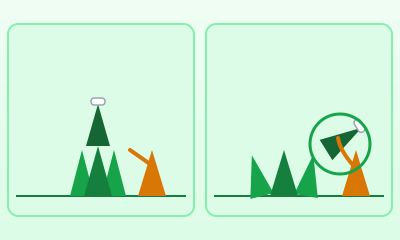
Figure: A spotter (orange) moves right behind the horse, ready to catch the rider if they fall.
Practice first
- Before the event, have everyone build a horse and practice standing up, walking, and dismounting
- Riders practice grabbing the front carrier's shoulders and landing feet first when the horse collapses
Adult supervision
- Have enough referees and spotters to stand by every pair of horses that engage, positioned to catch a falling rider
- Give every referee a whistle, and practice beforehand so that everyone freezes whoever blows it
When to stop play immediately
- a rider is about to fall head first, or a horse is collapsing badly
- horses pile up on each other, or someone is trapped underneath
- someone is grabbing a face or neck, or hitting
- a carrier is hurt (a twisted ankle, for example) and can no longer hold the horse up
Safer rule changes
- Cap-grab: make taking the cap the win, rather than knocking the rider off, so nobody needs to be unseated
- No charging: don't let horses ram into each other
- One-on-one: referees can watch a single bout far better than a free-for-all
- Collapse means reset: if a horse breaks apart, stop and rebuild it instead of declaring it out, so carriers don't strain to hold up a falling rider
- Even matchups: pair horses of similar build, and choose light riders
Age variations
- Preschool and young children: skip the horses and start by grabbing caps or headbands while standing on the ground, like a tail-tag game. It can also be a parent-and-child event, with adults as the horse and children riding
- Older primary school: horses of four, cap-grab only, no charging
- Junior and senior high school: one-on-one bouts and general's battles with planned tactics. Play gets rough, so add referees and spotters
- Adults and community events: strength differences are large, so make it voluntary and warm up first
Playing Kibasen in Japan
- Sports days and festivals: some schools play up the battle theme, with taiko drums or battle music as teams march in and generals calling out challenges. Rules differ from school to school, so go over the safety rules with everyone first
- In the pool: kibasen is also played in school pools. Even falling into water, a rider can hit the bottom if it's too shallow, while in water that's too deep the shorter carriers can't stand. Play away from the pool edge at a suitable depth. Some public pools ban shoulder rides and chicken fights, so follow the facility's rules
- Where to play: on grass or soft dirt where falls are cushioned. Don't stage mass grappling games in public parks
Kibasen vs chicken fight
The chicken fight (or shoulder wars) is the English-speaking world's closest cousin to kibasen.
| Kibasen | Chicken fight | |
|---|---|---|
| Players per team | 4 (3 carriers + rider) | 2 (one sits on the other's shoulders) |
| Usual setting | A school sports field | A pool or lake |
| How you win | Grab the cap or headband, or make the rider fall | Knock the top player off, or pull the pair apart |
| How it's played | An organized sports-day event with referees | Mostly informal play among friends |
Chicken fights carry the same risk of riders landing on their head or neck, and some pools ban them for safety.
Frequently asked questions
Q. What is kibasen?
Kibasen is a Japanese school sports-day game in which three players carry a rider who tries to snatch caps or headbands from riders on the other team. Its name means "cavalry battle", and the team with horses still standing or the most caps at the end wins.
Q. How many people are on a kibasen team?
Each horse has four people: three carriers and one rider. A team is made up of several horses, from two up to a whole grade at a school sports day.
Q. What's the difference between kibasen and a chicken fight?
Kibasen uses four-person horses on a sports field, and riders usually win by grabbing caps. A chicken fight uses two-person pairs, usually in a pool, and you win by knocking the top player off.
Q. Is kibasen dangerous?
Yes, it carries real risks. Riders can fall from height and injure their head or neck, and some schools have stopped playing it. If you play, use cap-grab rules, ban charging, practice beforehand, and have spotters ready to catch falling riders.
Q. Who should be the rider in kibasen?
Someone light with good balance. Among the carriers, put a strong player at the front and pick two rear carriers of similar height, so the horse stays level.
Learn more
- Chicken fight (Wikipedia): the chicken fight and kibasen
- Kibasen (Japanese Wikipedia): building horses, ways of winning, accidents, and court cases
- Ryo Uchida on the risks of kibasen (Yahoo! News Japan, in Japanese): the 2015 Fukuoka ruling and the share of injuries to riders
- Japan Sport Council school safety site (in Japanese): school accident cases and prevention materials
- Related: Bo-taoshi, Tug of war, and Kabaddi, other team contests from sports days and PE
Share this page