Capture the Flag Rules: How to Play, Field Setup, Jail & Variations
- Region:
- United States
- Tags:
- Team, Tag & chase, Territory, North America, Kids, Youth, Party
At a glance
- Players
- 6–30 players
- Game length
- 10 minutes or more a game (a US recess guideline). Play until a flag comes home, or set a time limit
- Equipment
- Two flags (a cloth, pinny or towel works) and cones or rope to mark the halves, flag zones and jails
- Space
- An open field big enough for two teams to run, split in half by a center line (no set size)
Contents (8)
What is this game?
Capture the Flag is a team tag game played on a field split into two territories. Each team guards a flag at the back of its half, and the goal is to sneak into the other half, grab their flag and carry it back across the center line without being tagged. Get tagged on the wrong side and you go to the other team's jail, where a teammate has to come and rescue you. Attackers, defenders and rescuers all matter, which is what makes it such a good game for strategy.
It's widely played at American schools and camps; Playworks, a US nonprofit that runs recess programs, publishes a version for schools. The idea is old. Jessie H. Bancroft's 1909 book Games for the Playground, Home, School and Gymnasium describes Stealing Sticks, in which teams raid each other's goal for sticks instead of a flag, and notes that it was also called "Scots and English" and probably grew out of border warfare. In Japan, a "treasure-taking tag" game (takaradori oni), where you take treasure from the other side's territory, appears in the national curriculum guidelines for first- and second-grade PE.
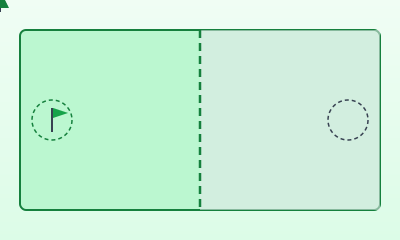
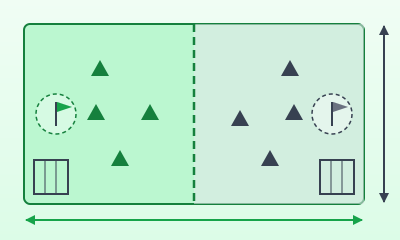
Figure: Split the field down the middle, with a flag zone at the back of each half and a jail in a corner. Set the length (green arrow) and width (dark grey arrow) to fit your group and space.
Equipment & setup
- Two flags: team-colored cloths, pinnies, towels, anything easy to carry while running
- Markers: cones, rope or field paint for the center line, the flag zones (circles) and the jails (squares). Playworks uses cones
- Team colors: matching pinnies or hats make it obvious who's on which side
Before the first game, walk the whole field together to show the boundaries and jails. Playworks also says to make sure everyone understands the rules and knows where the boundaries are before starting.
Capture the Flag field size
There's no official size. Too big and nobody ever reaches the flag; too small and everyone gets caught in seconds.
| Players per team | Rough guide |
|---|---|
| About 5 | Half a school field: a few seconds' sprint from the line to the flag |
| 10 to 15 | A full school field or soccer field: wide enough to find gaps in the defense |
| More | Add a second flag, or set a time limit |
This table is our rule of thumb; no organization sets numbers. Play a few rounds and adjust until flags come home about half the time.
Players & ages
| Format | Players | Notes |
|---|---|---|
| Small | 3 to 5 per team | Skip the jail: tagged players go back to their own half |
| Standard | 10 or more in all | Playworks lists it as a large-group game for 10 and up |
| Large | 30 or more in all | Bancroft (1909) lists Stealing Sticks for 10 to 30 or more players |
- It's a running and chasing game, so it suits anyone old enough to follow the rules, from early elementary school to adults
- When players differ a lot in size, swap tagging for pulling a flag belt to cut down on collisions
Rules
The aim is simple: bring the other team's flag back to your side. The rules below follow the Playworks version.
How a game works (minimal rules)
- Split into two teams and divide the field in half with a center line
- Each team puts its flag in the circle at the back of its half
- On "go," players may cross into the other half. You can tag opponents who are on your side
- A player tagged in the other team's half goes to that team's jail
- The first team to carry the other team's flag back across the center line wins
Standard rules (adding skill)
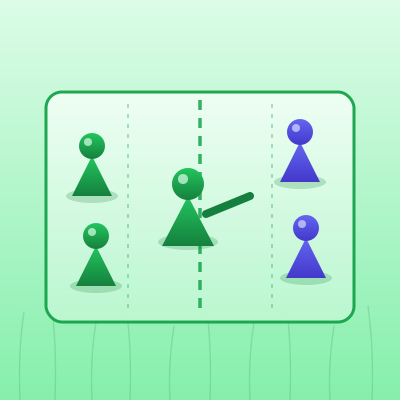
- Jailbreaks: a teammate who reaches the jail and tags a prisoner frees them, and both get a free walk back to their side. You can free only one teammate at a time (Playworks)
- Tagged with the flag: if the flag carrier is tagged, the flag goes back to its circle and the carrier goes to jail (Playworks)
- Guarding distance: anyone guarding the flag zone or the jail must stay at least 2 ft (60 cm) away from its boundary, so nobody can stand right on top of it (Playworks)
- The flag circle is safe: a player who gets both feet into the flag circle without being tagged can't be tagged while they stay there, so they can wait for a gap before running for the line (Playworks)
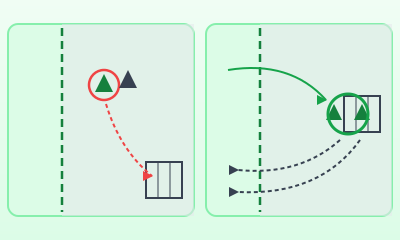
Figure: Left, tagged on the other side and sent to jail. Right, a teammate frees the prisoner and both walk back home.
Official competition rules
Capture the Flag has no single official rulebook and no governing body; schools, camps and youth groups all play their own way. Rules that are well documented include:
- Playworks (US recess): the standard rules above. Tags should be a light touch "like butterfly wings" on the back or shoulder; hard contact that could make someone fall counts as an unsafe tag
- Stealing Sticks (Bancroft, 1909): six sticks sit in a small goal at the back of each half. A player who reaches the other goal may carry one stick home and can't be caught while carrying it. A player caught in enemy territory stays in that goal as a prisoner until a teammate touches them, and neither can be caught on the way back. No stick may be taken while any of your team are prisoners, and the side that collects all the sticks wins
- Japanese school PE: the curriculum guidelines list treasure-taking tag among tag games for grades 1 and 2, and suggest ways to help children who find it hard, such as more treasures or more places to put them, and a different shape of territory
Scoring examples
Usually there are no points: bringing the flag home wins the game. For longer sessions, count how many times each team brings a flag home.
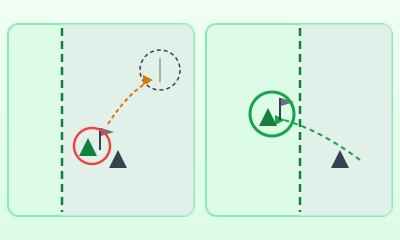
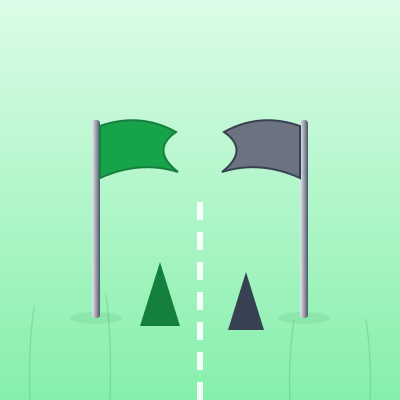
Figure: Left, the carrier is tagged, so the flag goes back to its circle (orange arrow). Right, the carrier makes it across the center line: that team wins (green ring).
- Example 1: a clean steal. A green player grabs the grey flag and, with defenders chasing, crosses the center line. Green wins
- Example 2: tagged at the line. The carrier is tagged a step short of the line. The flag goes back to its circle, the carrier goes to jail, and play goes on
- Example 3: best of three. Reset the flags and players after each capture; first team to two captures wins. It fits neatly into a recess period
Common fouls and tricky calls
- Tagged on the center line: decide before you start which side the line belongs to
- Pushing or grabbing: tags are light touches on the back or shoulder. Anything that could knock someone down is a foul
- Guards too close: stay at least 2 ft (60 cm) back from the jail and the flag circle (Playworks)
- Throwing the flag: normally you carry it. If you allow passing, Playworks still requires the flag to be carried over the center line
- Running out of bounds: count it as a tag, for example. Settling it in advance avoids arguments
Tips for enjoying the game
Common beginner mistakes
- Everyone attacks: the flag and jail are left wide open. Assign attackers, defenders and rescuers at the start
- One at a time: lone runners get picked off. Send two or three at once so one of them gets through
How to make it more fun
- Prison chains: let prisoners hold hands and reach out of the jail to make rescues easier (Playworks)
- Mass jailbreak: one rescuer frees everyone in jail at once, which makes comebacks more likely (Playworks)
- Hidden flags: hide the flags "in plain sight" within a set area (Playworks)
- Flag pulling instead of tagging: use flag-football belts and pull a flag instead of tagging. Japan's PE guidelines also describe tag games where you take an opponent's tag or flag
Age variations
- Younger kids: more flags, more places to put them, or a differently shaped territory (ideas from Japan's PE guidelines)
- Small groups: no jail; a tagged player returns to the back of their own half before playing on
- Adults and camps: play longer games over bigger ground, such as woods, but keep any area with poor sight lines within adults' view
Playing Capture the Flag in Japan
At school and in kids' groups
- Japan's PE guidelines list territory-taking tag and treasure-taking tag among the examples for grades 1 and 2, along with setting up and putting away equipment together and checking that the play area is safe
- For a sports day or camp event, assign one adult referee per team to watch the center line and the jail; calls go much more smoothly
Where to play and staying safe
- In parks, choose a spot away from paths, playground equipment, ponds and steps, and check the park's rules on its signs or with the park office
- In summer, schedule breaks and water, and set a time limit
- Grass is slippery after rain and sharp cuts cause falls. Wait for it to dry, or play a walking-only version
Frequently asked questions
Q. How many players do you need for Capture the Flag?
You can play with about three per team, but it's best with 10 or more players in all, so teams can split into attackers, defenders and rescuers. With small groups, skip the jail to keep the game moving.
Q. How big should the field be?
There's no set size. Start with about half a school field for five per team, then make it bigger if flags come home too easily and smaller if nobody ever reaches the flag.
Q. What happens when you get tagged?
If you're tagged on the other team's side, you go to their jail. A teammate who reaches the jail and tags you sets you free, and you both walk back to your side (Playworks rules).
Q. Where did Capture the Flag come from?
Nobody knows who invented it. Similar raiding games are old: a 1909 American games book describes Stealing Sticks, also called "Scots and English," and suggests it grew out of border warfare.
Q. How do you keep it safe?
Tag with a light touch on the back or shoulder, walk the boundaries together before you start, and make pushing and pulling a foul. Don't play on rough ground or near playground equipment.
Learn more
- Capture the Flag (Playworks): recess rules and variations
- Games for the Playground, Home, School and Gymnasium (Jessie H. Bancroft, 1909, Project Gutenberg): see "Stealing Sticks" and "Prisoner's Base"
- Japan's elementary PE curriculum guidelines (MEXT, 2017) (Japanese): tag games for grades 1 and 2, including treasure-taking tag
- Related: Red Light, Green Light, Kubb, Kabaddi, Flag Football — tag games, territory games, and a sport where you pull flags instead of tagging
Share this page